Reading Help · Letter sounds · 5 minute read
Say mmm, not muh: the sound mistake that makes blending harder
Ask your child what sound m makes and you might hear "muh". Ask about t and you hear "tuh". It sounds close enough. But that little extra "uh" is one of the most common reasons blending feels hard, and once you can hear it, it's an easy fix.
What's wrong with "muh"?
When a child says "muh-a-puh" for map, they're joining five sounds, not three: /m/, "uh", /a/, /p/, "uh". Push those together and you get "muhapuh", not map. Clean sounds, without the extra "uh", slide into the word almost on their own: /mmm/ /aaa/ /p/, map.
Two kinds of sounds
Stretchy sounds. You can hold these for as long as you have breath: /mmm/, /sss/, /fff/, /lll/, /nnn/, /rrr/, /vvv/, /zzz/, and the short vowel sounds, like the /a/ in cat and the /i/ in sit. Stretch them.
Quick sounds. These stop as soon as you make them: /b/, /d/, /g/, /k/, /p/, /t/. Say them short and crisp, like a tiny pop, with nothing after them. /t/ is a puff of air, not "tuh".
A quick check you can do together: put a hand in front of your mouth and say /p/. You feel one small puff of air, and then nothing. If you hear a vowel after it, it's "puh".
How to practice (five minutes)
-
Say it in a word first
Say "sun", then just its first sound: /sss/. Hearing the sound inside a word keeps it clean.
-
Stretch or pop?
Ask, "Can we stretch this one, or is it a quick one?" Sort a few letters into the two groups.
-
Use a mirror
Sit side by side in front of a mirror and watch your mouths as you say each sound.
-
Start with stretchy words
Words like man, fan, sun and van are the easiest to blend, because you can hold the sounds together: mmmaaannn, man.
Then use the build, tap, slide, write routine in My kindergartener knows the letter sounds but can't blend them into words.
What to say
- "Let's say just the first sound in sun: /sss/."
- "Is that a stretchy sound or a quick sound?"
- "Quick sounds are short. /t/, not tuh."
- "Stretch them together: mmmaaap. What word is it?"
Before you buy: can I hear the letter sounds first?
Yes, and it's worth doing before you buy any phonics toy, game or app. Find its audio, or a video of someone using it, and listen for one quick sound like /t/ or /p/. If you hear "tuh" or "puh", your child will learn the extra "uh" along with the letter.
For CVC Word Magic, which we make, you can watch Rachel, a speech-language pathologist, sound out and blend cat with it in the video below.
When to ask for help
Some children find certain sounds hard in everyday talking, not only when they read. Many speech sounds keep developing through the early school years, and sounds like r and th often come later. If you're worried about how your child says sounds when they talk, ask your pediatrician or your child's school about a speech and language check.
Sounding out and blending, from a speech-language pathologist
Rachel shows it with one word. She sounds out c-a-t, slides to blend it, then changes the first sound to make new words.
The video plays from TikTok, whose privacy policy applies. Watch on TikTok
Find a place to start
A reading activity for your next session
Answer a few questions about what your child enjoys doing now. See a suggested activity before any email request.
Find an activity to tryNo email needed for the quiz or your result.
The product for this stage
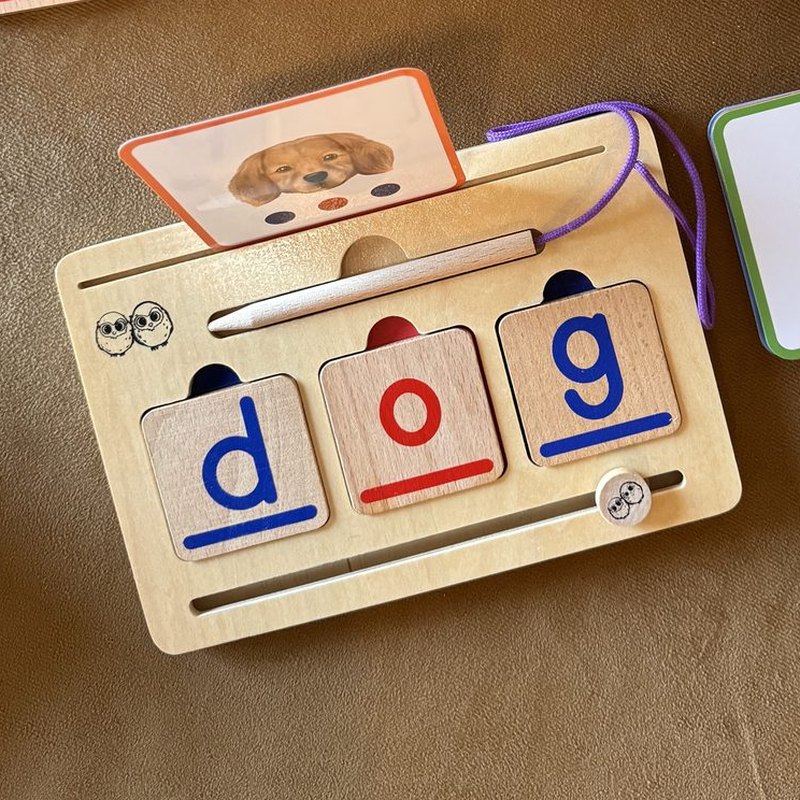
For: saying the sounds and joining them into first words
CVC Word Magic
Build a word with the color-coded tiles, tap each sound and move the slider as you blend them together. Flip the tiles to trace the letters. You guide the practice, one step at a time.
If the sounds in a word are unfamiliar, practice those together first. The reading check can suggest a place to start.
Questions parents ask
Does "muh" matter if my child is blending well?
If blending is going well, don't worry about it. The extra sound matters most when a child is stuck turning sounds into a word.
What about the letter x?
x usually says two sounds together, /ks/, as in fox. Say it quickly as one.
My child's teacher says the sounds a little differently. Who's right?
Ask which sounds the class uses and match them at home. It helps when home and school sound the same.
Should I teach letter names too?
Letter names are useful, but when your child is reading a word, use the sounds. "Ess" won't help anyone read sun.
When should I worry about my child's speech?
If your child is hard to understand, or you have questions about how they say sounds when they talk, ask your pediatrician or your child's school about a speech and language check.